
- Home
- Kenya Travel Guide for Indian Travelers
- Masai Mara Migration 2026: When Should Indian Travellers Plan Their Trip?
- Kenya Travel Guide for Indian Travelers
- On 09.06.2026
- Jahanvi Sharma
- Tags International Travel from India
Masai Mara Migration 2026: When Should Indian Travellers Plan Their Trip?
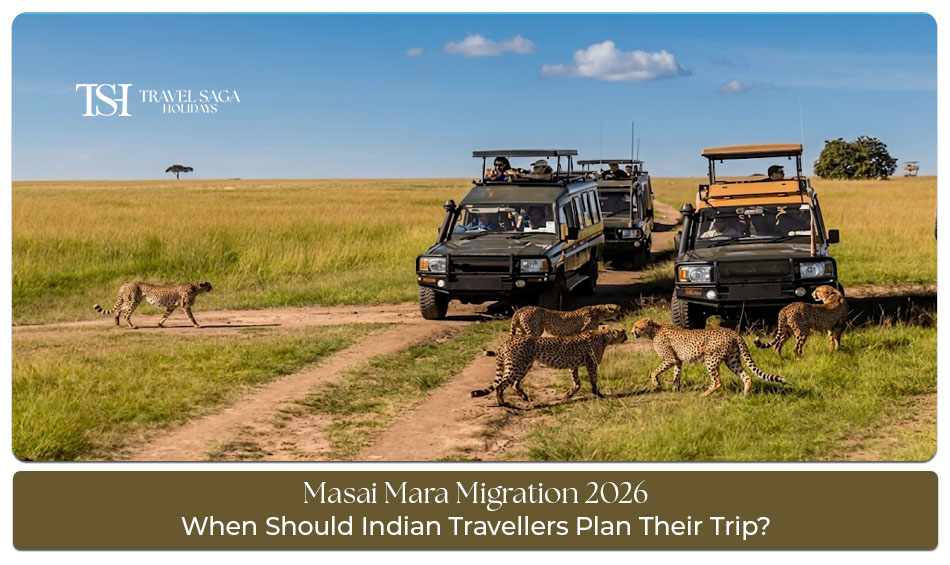
Every single year, one of the most incredible events on earth takes place in the heart of Africa. Millions of animals move across the vast plains in search of green grass and fresh water. If you love nature, wildlife, and adventure, witnessing this journey should be right at the top of your travel bucket list. Planning a trip to Kenya to see this event is an experience that stays with you forever. If you are wondering about the best time to visit, our guide on Masai Mara Migration 2026 can help you plan your trip more effectively. For Indian tourists, getting to see this massive movement of animals is a dream come true. Here is everything you need to know about preparing for your journey.
What Is the Masai Mara Great Migration?
Understanding the Annual Wildebeest Migration
The Masai Mara Great Migration 2026 is a massive journey that never truly stops. Over 1.5 million wildebeests, zebras, and gazelles travel from the dry plains of Tanzania into the lush green grass of Kenya. This movement is entirely driven by nature and seasonal rainfall. The Great Migration Kenya 2026 follows a natural rhythm where the herds look for food to survive.
Understanding the Masai Mara wildebeest migration dates helps you realize that the exact timing changes slightly every year based on the rains. If you are exploring various International tour packages from India, this specific wildlife event is definitely the most exciting option you can choose.
Why It Is Considered One of the World’s Greatest Wildlife Spectacles?
This event is often called a wonder of the world because of its sheer scale. The true drama happens when the herds reach the rivers. They must cross treacherous waters filled with massive, hungry crocodiles. The chaos, the dust, and the raw energy of survival make it a thrilling sight.
Predators like lions and leopards follow the herds closely, waiting for the perfect moment to hunt. For anyone looking for a great International visa from India, getting your travel documents ready for this adventure is the first step toward witnessing these dramatic river crossings. It is a powerful display of life and survival that you cannot experience anywhere else.
Best Time to Visit Masai Mara Migration in 2026
July to October – Peak Migration Season
The best time to visit Masai Mara for migration is during the dry months from July to October. During this period, the rains have stopped and the grass has dried up, forcing the massive herds to move directly into Kenya. The weather is generally pleasant, making it very comfortable for long game drives.
Since the grass is short, it is much easier to spot the animals from a distance. This is the prime Masai Mara migration season when you are guaranteed to see unbelievable wildlife action. If you want a complete and hassle-free holiday, you can look at tailored Kenya Tour Packages to find the right itinerary for your style.
August and September – The Best Months for Indian Travellers
August and September are widely considered the absolute best month to visit Masai Mara. This is the exact time when the dramatic Mara River crossings happen most frequently. The animals gather in huge numbers on the river banks, creating intense moments of suspense before they leap across the water.
Because this is the peak of the Masai Mara Migration 2026, the parks can get busy. To experience this luxury without any planning stress, checking out a premium Kenya 9 Days Luxury Tour Package is an excellent option for families and couples who want comfort along with top-tier wildlife viewing.
June and November – Budget-Friendly Alternatives
If you want to avoid the largest crowds and save some money on your trip, the shoulder months are worth considering. June is the period when the herds start moving away from the southern plains. November is when the short rains begin, and the herds start their journey back south.
Choosing these months can lower your overall Masai Mara safari cost from India significantly. The lodges and camps offer lower rates, and there are fewer safari trucks around. You can easily find shorter, budget-friendly options like a well-planned Kenya 5 Days Tour Package that gives you a great taste of the African wilderness.
Month-by-Month Masai Mara Migration 2026 Guide
June–July 2026
In June, the rainy season ends, and the savannah begins to dry up. The wildebeests begin their long march northwards. By July, the vanguard of the migration starts arriving at the borders of Kenya. This marks the start of the official Masai Mara migration safari 2026 viewing season.
This early period is wonderful because the air is crisp, and the scenery is still fresh and green. It is a fantastic time to book a Kenya 7 Days Tour Package to witness the arrival of the herds and enjoy excellent tracking of lions and cheetahs who are waiting for the feast to begin.
August–September 2026
This is the ultimate peak of the entire Great Wildebeest Migration Africa cycle. By August, the herds have fully settled into the region. They constantly move back and forth across the rivers looking for fresh grazing pastures.
Every day brings a new adventure on a Masai Mara migration safari 2026. The predators are highly active, and you can see hunts happening in broad daylight. If you are short on time but still want to see this peak action, you can opt for a balanced Kenya 6 Days Tour Package to focus entirely on the main reserve areas.
October–November 2026
By October, the herds have usually consumed most of the grass in the northern plains. As the clouds begin to gather for the short rains, the animals sense the moisture in the south and begin to turn around.
This is a transition phase in the Masai Mara travel guide 2026. It is a peaceful time to visit if you enjoy birdwatching and seeing newborn animals. To know more about the team helping you book these off-season adventures, you can read the About us section on our platform.
How Indian Travellers Should Plan Their Masai Mara Trip?
Visa and Entry Requirements for Indians
Planning an African safari requires keeping track of important official paperwork. Indian citizens need to ensure their passports are valid for at least six months from their travel date. Kenya has simplified its entry processes, making it much easier for tourists to plan their holidays.
Having a valid Kenya Tourist Visa for Indians ensures that you face no delays at airport immigration when you arrive. Additionally, you must carry a valid Yellow Fever vaccination certificate, which is a mandatory requirement for all travellers coming from India to Kenya.
Flights from India to Kenya
Getting to the African continent from India is very simple and convenient. There are direct flights operating regularly from major Indian hubs like Mumbai to Nairobi, the capital city of Kenya. The flight time is around six hours, making it a relatively quick international journey.
Once you land in Nairobi, you can choose to travel to the wildlife reserve in two ways. You can take a small, scenic safari flight directly to the airstrips inside the reserve, which takes about 45 minutes. Alternatively, you can enjoy a 5 to 6-hour road drive in a 4×4 safari vehicle.
Recommended Safari Duration
To truly enjoy the wilderness, you should not rush your trip. The absolute best time to visit Masai Mara for migration involves spending at least three to four nights inside the actual reserve. This gives you enough time to explore different areas of the park and track diverse wildlife.
A proper Masai Mara tour package from India usually combines a few nights in the Mara with visits to other beautiful locations like Lake Nakuru. A total trip length of 7 to 9 days is perfect for Indian families to enjoy a relaxing yet deeply adventurous holiday.
Essential Travel Tips for Indian Visitors
What to Pack for a Migration Safari?
Packing the right clothing is essential for a comfortable safari experience. You should choose clothes with neutral, earthy colours like khaki, brown, green, and beige. Avoid wearing very bright colours like red or yellow, as they can disturb the animals.
Early morning game drives can be surprisingly cold, so a warm jacket, scarf, and a hat are highly recommended. By noon, the sun gets strong, so lightweight shirts, sunglasses, and good sunblock are necessary.
Health and Safety Considerations
Your health should be a top priority when traveling internationally. Apart from the mandatory Yellow Fever vaccine, it is highly recommended to take malaria prevention medication before you start your Kenya safari for Indian travellers.
Most safari luxury lodges serve excellent food, including specialized vegetarian and Indian meals, so you do not have to worry about your dietary preferences. If you have any specific health questions or need help setting up your travel details, feel free to Contact us directly for assistance.
Safari Etiquette and Wildlife Viewing Tips
When you are out on a Masai Mara migration safari 2026, you are entering the home of wild animals. Always stay inside your vehicle unless you are at a designated picnic spot. Avoid making loud noises or sudden movements that could scare the herds.
Patience is the ultimate key to a successful safari. Trust your guide’s instinct, as they know when to visit Masai Mara for migration hot spots and understand animal behavior perfectly. Enjoy the peaceful sounds of the African bush while you wait.
Conclusion
Witnessing the Great Migration in Kenya is an unforgettable adventure that connects you deeply with the raw beauty of nature. Planning this journey with the right timing and perfect itinerary ensures that your African holiday is smooth, comfortable, and full of magical moments. To start planning your dream safari and explore the best travel options, visit travelsagaholidays.in today. Get directions to this office.
FAQs – Masai Mara Migration 2026: When Should Indian Travellers Plan Their Trip?
The best time is July to October, with August and September offering the highest chances of witnessing dramatic river crossings.
The Masai Mara Migration is part of the Great Migration, where over 1.5 million wildebeest, along with zebras and gazelles, move between Tanzania’s Serengeti and Kenya’s Masai Mara.
A 4 to 5-day safari is ideal for enjoying game drives and increasing your chances of seeing the migration.
Yes. If you travel between late July and September, you have a good chance of witnessing the famous Mara River crossings, although they depend on wildlife movement.
Besides wildebeest and zebras, you can spot lions, cheetahs, elephants, giraffes, hippos, crocodiles, and many other wildlife species.
Yes. It is one of the world’s greatest wildlife spectacles and a bucket-list experience for nature lovers and safari enthusiasts.
FAQs – Masai Mara Migration 2026: When Should Indian Travellers Plan Their Trip?
The best time is July to October, with August and September offering the highest chances of witnessing dramatic river crossings.
The Masai Mara Migration is part of the Great Migration, where over 1.5 million wildebeest, along with zebras and gazelles, move between Tanzania’s Serengeti and Kenya’s Masai Mara.
A 4 to 5-day safari is ideal for enjoying game drives and increasing your chances of seeing the migration.
Yes. If you travel between late July and September, you have a good chance of witnessing the famous Mara River crossings, although they depend on wildlife movement.
Besides wildebeest and zebras, you can spot lions, cheetahs, elephants, giraffes, hippos, crocodiles, and many other wildlife species.
Yes. It is one of the world’s greatest wildlife spectacles and a bucket-list experience for nature lovers and safari enthusiasts.