
- Home
- Singapore Travel Guide For Indian Travelers
- Cash or Card for Singapore: What Should You Carry on Your Trip?
Cash or Card for Singapore: What Should You Carry on Your Trip?
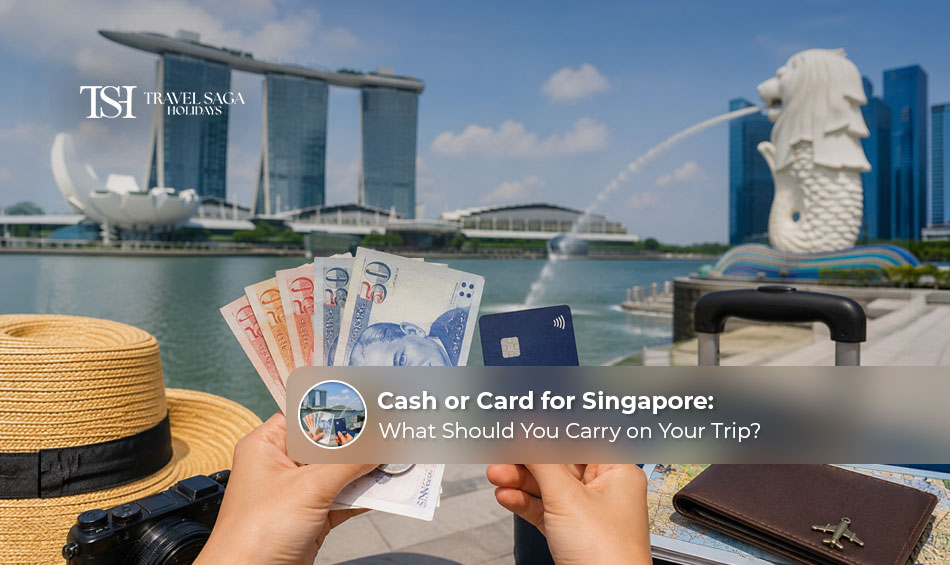
You have booked your flights from Mumbai or Delhi to Changi Airport, packed your bags, and mapped out your itinerary. But did you know that simply swiping your regular Indian bank card at the wrong counter could quietly eat into thousands of Rupees through hidden fees? It’s one of the most common and costly mistakes Indian tourists make.
Here’s the twist: Singapore is one of the most digitally advanced financial hubs in the world, yet its most beloved cultural experience, its legendary hawker food scene, still runs largely on hard cash. So when it comes to the question of Singapore trip cash or card, the honest answer isn’t one or the other. It’s both, used strategically.
The smartest way to think about your Singapore travel budget from India is the 80:20 rule: roughly 80% of your spending routed through zero-forex digital channels, and 20% kept aside as local physical currency for the moments cards simply won’t work. Get this split right, and you’ll travel smoother, cheaper, and stress-free.
The Hidden Trap of Using Regular Indian Cards Abroad
Before you decide on your Singapore trip cash or card strategy, it’s worth understanding why your everyday salary account debit card or standard credit card is actually the worst tool to carry overseas.
1. Forex Markup Fees (The 3.5% Silent Tax)
Most standard Indian bank cards charge an average forex markup fee of around 3.5% on every international transaction. On top of that, an 18% GST is applied to this markup itself, which means every single swipe abroad quietly costs more than what you see on the receipt. Over a five-day trip, this “invisible tax” can add up to a significant sum.
2. The Dynamic Currency Conversion (DCC) Trap
At many Singaporean stores, the payment terminal may ask, “Would you like to be billed in INR or SGD?” Always choose SGD. Opting for INR triggers Dynamic Currency Conversion, where the merchant applies its own, usually terrible, exchange rate, tacking on an extra 4% to 7% to your bill without you realising it.
3. LRS and TCS Under Indian Law
Indian travellers should also know the current tax rules. Under the Liberalised Remittance Scheme (LRS), international credit card spends are exempt from Tax Collected at Source (TCS) up to ₹7 lakh per financial year. Cross that limit, and a steep 20% TCS applies upfront. Big spenders should track their annual international spend carefully to avoid surprises. If you’re still finalizing your travel documents, it’s a good time to sort out your Singapore visa from India as well, so nothing holds up your departure.
Enquire Now Singapore visa from India
Where “Card is King” in Singapore (Your Zero-Forex Zone)
Once you know the traps, it’s time to see where plastic and digital payments genuinely outperform cash, faster, safer, and often cheaper.
1. Public Transport (MRT Metro & Buses via Tap-and-Go)
You don’t need a separate tourist transit card. Simply tap your contactless Indian credit or forex card directly at the MRT gates or on buses. Do note that Singapore’s LTA charges a nominal daily processing fee of around SGD 0.60 for foreign cards, a small price for total convenience. If you’re planning a shorter getaway, our Singapore 7 Days Tour Package covers all major transit-friendly attractions without the hassle of separate transport planning.
2. Retail Malls, Theme Parks, and Fine Dining
Cards are accepted almost everywhere at high-end establishments, think Orchard Road retail stores, Universal Studios Singapore, Gardens by the Bay, and the restaurants at Marina Bay Sands. This is where a zero forex credit card for Singapore truly pays off, saving you both time and money.
3. Ride-Hailing Apps (The Grab & Gojek Strategy)
Download the Grab app before you leave India and link a zero-forex card directly to it. This lets you book and pay for rides seamlessly, avoiding the cash-handling surcharges that sometimes apply with street-hailed taxis. If you’re extending your trip, our Singapore 6 Days Tour Package pairs perfectly with this app-first travel approach.
Where You Absolutely Need Cash (Don’t Get Stranded)
No matter how good your card game is, some Singapore experiences simply demand cash in hand.
1. Iconic Hawker Centres and Food Courts
Legendary, affordable food stalls at places like Maxwell Food Centre or Chinatown Complex typically don’t accept international cards. Many run on cash or local PayNow QR codes, which Indian UPI apps like PhonePe, GPay, or Paytm cannot process. If Singapore is just one stop on a longer journey, browsing our holiday packages from India can help you plan the rest of your route smartly.
2. Street Shopping & Traditional Ice Cream Carts
Cash-only hotspots include Bugis Street for souvenirs, small local grocery shops in Little India, and the iconic SGD 1.50 wafer ice cream carts along Orchard Road. These small, delightful experiences are part of what makes Singapore tour packages from India memorable.
Enquire Now Singapore tour packages from India
3. Exact Cash Math: How Much SGD to Buy?
So, how much cash to carry to Singapore? For a standard 4-to-5-day trip, carry SGD 150 to 300 per person (roughly ₹9,500 to ₹19,000) in physical currency. Exchange your money at competitive money changers in India or at Changi Airport rather than withdrawing from local ATMs, which levy steep foreign card withdrawal charges. If you’re travelling onward to another country, sorting your international visa from India in advance will save you last-minute stress.
Top Indian Cards to Carry to Save on Forex Spends
Now that we know which mode of payment to carry where, here are some of the top Indian credit cards that you must carry for your international spendings:
1. Zero-Forex Credit Cards
- Federal Bank Scapia Credit Card: 0% forex markup, lifetime free, and unlocks unlimited domestic lounge access once you cross a combined monthly spend of ₹20,000.
- AU ixigo Credit Card: True zero forex markup, plus discounts on international flights and complimentary international lounge access via quarterly spend targets.
- IDFC FIRST WOW! Credit Card: A secured card issued against a Fixed Deposit, requiring no income proof or credit history, ideal for students or first-time international travellers.
2. Neo-Banking & Traditional Forex Options
The Niyo Global Card offers a digital debit experience with zero forex markup and real-time spend tracking. For those who prefer locking in rates in advance, traditional options like the BookMyForex True Zero Markup Card or HDFC Regalia ForexPlus let you buy SGD digitally in India and shield yourself from currency fluctuations during the trip. Have questions about which option suits your itinerary best? Contact us and our travel experts will guide you.
Smart Financial Comparison for Indian Travellers
| Card / Payment Type | Forex Markup Fee | Best Used For | Hidden Catch / Watchout |
| Regular Indian Debit Card | 3.5% + 18% GST | Emergency backup only | Extreme hidden fees & high ATM withdrawal costs |
| Zero-Forex Credit Card | 0% | MRT transit, shopping malls, hotel stays | Subject to regular credit score eligibility checks |
| Niyo Global / Fintech Card | 0% | Dining, app bookings, instant wallet reloads | Relies on active internet/app connectivity |
| Prepaid Forex Card | 0% (locked in) | Budgeting fixed trip expenses | Residual balance withdrawal fees back in India |
| Physical Cash (SGD) | Cost of initial exchange | Hawker stalls, souvenirs, local tips | High risk if lost or stolen; no fraud protection |
These Singapore currency exchange tips should help you plan a payment mix that’s both cost-effective and practical. To learn more about how we help travellers plan smarter trips, check out our about us page.
Conclusion
At the end of the day, the debate of Singapore trip cash or card isn’t about picking a winner, it’s about using each where it works best. Let your zero-forex card handle the malls, metro, and ride-hailing apps, and keep a modest stash of SGD cash for hawker centres, street stalls, and those small unplanned moments that make Singapore special. Get this balance right, and your trip stays smooth, affordable, and stress-free from Changi to checkout.
Ready to plan your perfect Singapore getaway? Let the experts at Travelsagaholidays.in design a seamless itinerary, handle your visa, and help you budget like a pro, so all you have to do is enjoy the trip.
FAQs: Cash or Card for Singapore
Both. Cards work well for transport, malls, and dining, but cash is essential for hawker centres and small local shops.
Around SGD 150 to 300 per person is a comfortable amount for a standard 4-to-5-day trip.
Cards like the Federal Bank Scapia Credit Card, AU ixigo Credit Card, and IDFC FIRST WOW! Credit Card all offer 0% forex markup and are popular choices among Indian travellers.
Not directly. Singapore’s local PayNow QR system isn’t compatible with Indian UPI apps, so cash remains necessary at many small vendors.
Under the Liberalised Remittance Scheme, international credit card spends are TCS-exempt up to ₹7 lakh per financial year; beyond that, a 20% TCS applies.
Both are fine, but avoid using local ATMs in Singapore, as they charge steep foreign card withdrawal fees. Competitive money changers offer better rates. For more related queries, you can reach out to our Frequently Asked Questions page.