
- Home
- Tanzania Travel guide For Indian Travelers
- Tanzania Safari Cost in 2026: What Indian Travellers Should Expect
Tanzania Safari Cost in 2026: What Indian Travellers Should Expect
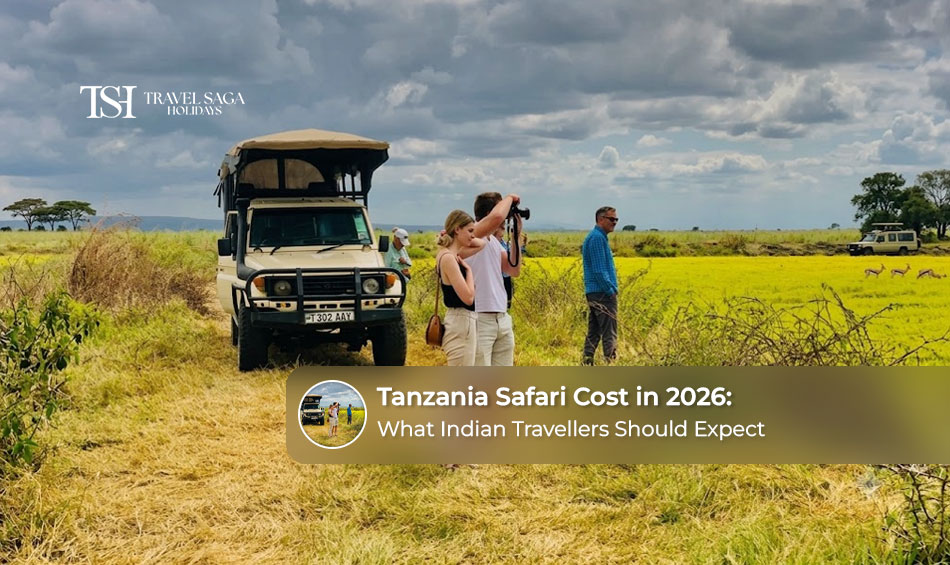
When it comes to Tanzania, the first thing people do think of is safari. Experiencing one of the best things in this country is a Tanzania safari. It is not a cheap adventure you can go on. The parks alone take a lot of your money. Most first-time travellers do not have that idea. The ideal cost that you have to pay for a single week is between ₹2 lakh and ₹10 lakh per person. You might be wondering now what makes this gap so big. To make this gap clear, you need to understand the safari properly. This guide takes you through everything you need to know and makes this budget clearer.
What a Tanzania Safari Costs Per Day in 2026
Operators price safaris per person per day, and the spread is wide. Across the market, expect roughly ₹24,000 to ₹1,46,000+ per person per day, depending on how you sleep, how you travel, and when you go.
Daily Rates by Comfort Level
Where you land on this table depends mostly on your accommodation. A tent in a public campsite and a fly-in luxury camp can sit in the same park and cost five times as much. Rupee figures in this guide use about ₹97 to the US dollar, the rate on 9 October 2026, so expect them to shift slightly with the exchange rate.
| Tier | Per Person Per Day | What That Usually Means |
|---|---|---|
| Budget | ₹24,000–₹39,000 | Camping or basic lodges, simple meals |
| Mid-range | ₹39,000–₹78,000 | En-suite tents or lodges, private 4×4, full board |
| Luxury | ₹82,000–₹1,46,000+ | Premium camps, fly-in transfers, specialist guides |
Why Tanzania Costs More Than Other African Safaris
Tanzania sits at the expensive end of African safari destinations, and park fees are the main reason. The Serengeti and Ngorongoro charge more per day than most parks in Kenya, Botswana, or South Africa. That’s why Kenya often wins on price when travellers compare the two. If you’re still deciding where to go, our holiday packages from India let you compare destinations side by side.
Park Fees: The Part You Can’t Negotiate
Park fees are set by the Tanzanian authorities, so no operator can discount them. Current published rates for non-resident adults, VAT included, look like this. Operators quote slightly different figures, so confirm the exact amount for your travel dates through the Tanzania National Parks Authority.
| Park / Area | Adult Fee Per Day | Notes |
|---|---|---|
| Serengeti | About ₹8,000 ($82.60) | Extra concession fee if you sleep inside the park |
| Ngorongoro Crater area | About ₹6,900 ($70.80) | Plus a separate vehicle fee for the crater floor |
| Tarangire | About ₹5,700 ($59) | Cheaper alternative to the Serengeti |
| Lake Manyara | About ₹5,700 ($59) | Short, easy add-on |
The Ngorongoro Crater Vehicle Fee
The vehicle during the safari is costly and can cost you around ₹28,600 ($295) per vehicle. However, the best thing is that it does not matter how many people are inside. If all the people fit in easily, you do not have to pay the additional cost of booking one more vehicle. This is how you can make your safari cheaper because all the charges of the vehicle will be shared among 6 people, making it suitable.
How Many Days You Actually Need
Trip length changes the price more than almost any other choice, and more days don’t always mean a better trip. Four to five days covers the headline parks, while a week lets you slow down and add the Serengeti properly. Our guide on how long a Tanzania safari should be helps you avoid paying for days you won’t use.
What a 7-Day Northern Circuit Trip Adds Up To
A standard week covering Tarangire, Ngorongoro, and the Serengeti is the most common first itinerary. Park fees alone for that route land around ₹48,500 to ₹58,000 per person, and the full price scales from there. Our Tanzania 7 days tour package follows a similar route if you want a fixed price to compare against.
| Tier | 7-Day Cost Per Person | Typical Set-Up |
|---|---|---|
| Budget camping | ₹1,75,000–₹3,40,000 | Camping or basic lodges |
| Mid-range lodge | ₹2,72,000–₹4,75,000 | Lodges or tented camps, private vehicle |
| Luxury | ₹5,34,000–₹10,19,000+ | Premium camps, possible fly-in legs |
What That Number Leaves Out
Most quotes cover lodging, meals, the vehicle, the guide, and park fees. They usually don’t cover the following:
- International flights to and from Tanzania
- Your Tanzania visa
- Travel and medical evacuation insurance
- Tips for guides, cooks, and lodge staff
- Optional extras like hot air balloon rides or walking safaris
- Drinks beyond what the lodge includes
The Yellow Fever Certificate: A Rule That Catches People Out
Indians do not have to worry about things like a yellow fever certificate because we are not a yellow fever country. Only a few countries are there whose citizens need to apply for a yellow fever certificate.
Note: Our international tourist visa services can handle the paperwork for you so that you do not have to deal with such hassle.
Where You Can Actually Save Money
You can bring the cost down without losing the core experience if you choose your trade-offs carefully. A shorter route is the simplest start, and our Tanzania 5 days tour package shows how much you can see on a compact itinerary. Beyond that:
- Travel in the shoulder months, when rates drop, but game viewing stays strong
- Pick Tarangire or Lake Manyara over extra Serengeti days, since park fees are lower
- Share a vehicle with other travellers to split the crater fee and guide costs
- Stay in lodges just outside the park gate to avoid nightly concession fees
- Book early for high season, when the best-value lodges sell out first
Cost Mistakes to Avoid
The cheapest quote often isn’t the cheapest trip. Watch for these common slip-ups:
- Comparing quotes without checking whether park fees are included
- Forgetting the concession fee for nights spent inside the park
- Overlooking the separate Ngorongoro Crater vehicle fee
- Choosing an operator purely on price, then paying for a poorly maintained vehicle
- Leaving flights and the visa out of the budget until the last minute
Booking a Package vs Planning It Yourself
Booking everything by yourself is always hectic but not impossible. When you do book something by yourself, you will be going to focus on those things only. On the other hand, when you book your Tanzania tour packages, you do not have to worry about any hassle, and you can enjoy everything with peace of mind. There would be very little cost difference when you plan yourself and when you book. But when you book, you do not have to worry about anything other than enjoying your journey.
Conclusion
Tanzania safari is one of the most famous safaris all over the world. Here you will have the best time of your life among wild animals. The guide above has broken down every single thing so that you can understand everything and the cost breakdown easily. Booking your tour package is now easy. All you have to do is visit Travelsagaholidays.in and apply for your package now. From both options, you can select one according to your preferences and how long you have to enjoy the safari.
Frequently Asked Questions: Tanzania Safari Cost
A week typically costs ₹1,75,000 to ₹3,40,000 per person for budget camping, ₹2,72,000 to ₹4,75,000 for mid-range lodges, and ₹5,34,000 to ₹10,19,000+ for luxury, before international flights.
Yes, it is noticeable that the Tanzania safari is more expensive than that of Kenya. The park fees are higher, and the Serengeti and Ngorongoro also charge much more than in Kenya. After considering all the costs, it is clear that a Tanzania safari is more expensive than a Kenya safari.
Yes. Indian passport holders need a visa. The ordinary single-entry tourist visa costs about ₹4,850 ($50), is valid for 90 days, and is available as an e-visa or on arrival.
Published rates are roughly ₹8,000 (82.60)peradultperdayfortheSerengetiand₹6,900(70.80) for the Ngorongoro area, plus about ₹28,600 ($295) per vehicle for the crater descent.
March to May, during the long rains, usually offers the lowest rates and fewest crowds, though some camps close and the weather is less predictable. For more related queries, visit our Frequently Asked Questions page.