
- Home
- International visa & Travel Documents
- Vietnam eVisa for Indians: How to Apply
Vietnam eVisa for Indians: How to Apply
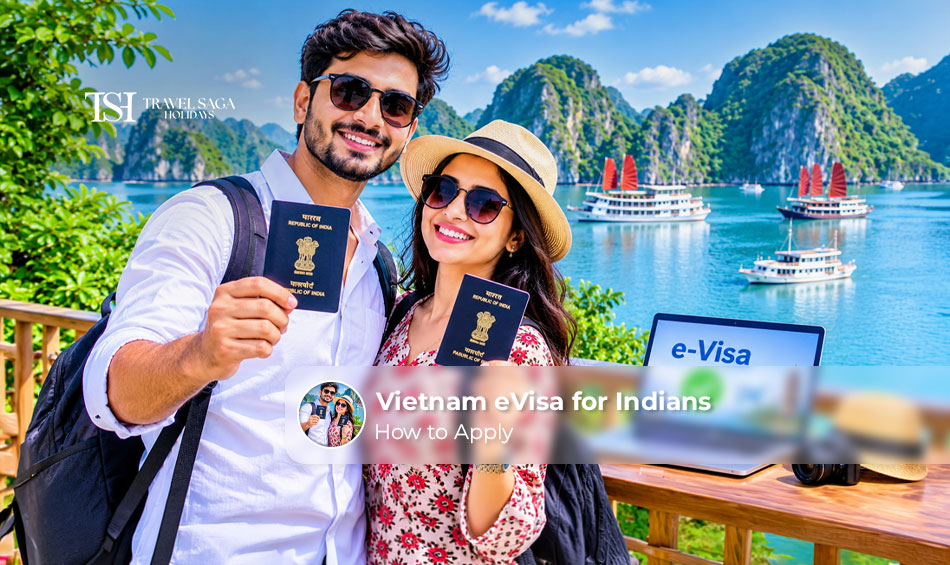
Vietnam is one of the easiest international trips for Indian travellers. However, the visa is where small mistakes can sometimes cost the most time. A wrong spelling, a weak photo, or an application that is filed too early can affect your good itinerary. This guide to the Vietnam eVisa for Indians will cover the documents, the steps, the price, the timeline, and the mistakes that can cause delays.
Do Indians Need a Visa for Vietnam?
Yes, and the electronic route is the one that is being used by most of the Indian travellers.
The Short Answer
Indian passport holders must have a valid visa to enter Vietnam. Using the online eVisa method will remove the need to visit an embassy, and it will be issued to you as an electronic document that you carry printed or on your phone. Moreover, you can also check our post on whether Indians need a visa for Vietnam in 2026 covers the question in more depth.
Where It Is Accepted
The eVisa is accepted at all international airports, land border crossings, and seaports in Vietnam. That makes it flexible for those travellers who have a plan to enter one city and leave from another. However, for arrival-day rules, you can read the Vietnam entry rules for Indians in 2026.
Single or Multiple Entry
There are two entry formats. You can check the table below before you choose.
| Format | Validity | Stay | Entry |
| Single entry eVisa | 30 days | Up to 90 days | One entry |
| Multiple entry eVisa | 90 days | Up to 90 days | Multiple entries |
Once you leave Vietnam, you cannot use a single-entry visa. However, if you need multiple entries, you can check the official Vietnam portal or ask our team for guidance. Furthermore, go through our guide to the Vietnam e-Visa for Indians which will help you to explain the formats in more detail.
Cost, Processing Time and Validity
Money and timing will decide how comfortable your planning feels.
What ₹5,000 Covers
The listed service price to get a single-entry Vietnam Tourist Visa for Indians is ₹5,000. This will cover application filing support, document verification, real-time tracking, expert guidance, and follow-up until the visa decision. Each traveller should have their own eVisa, so if a family of four is travelling to Vietnam, they have to pay ₹20,000.
Processing Time
Processing is estimated at 3 to 5 working days from the date of successful submission. Moreover, working days run from Monday to Friday, and it also excludes Vietnamese public holidays. However, submission of Incomplete documents, discrepancies, and peak seasons can all add time. You can check more about Vietnam visa processing time for Indians before you fix your flights.
Validity Versus Stay
Validity is the 30-day window in which you have to enter Vietnam, and it starts from the date of issue. Meanwhile, the stay is how long you can remain in Vietnam after entry, up to 90 days at the immigration officer’s discretion.
Documents You Need for Vietnam E-Visa
Vietnam eVisa Requirements are not complicated, but they must be complete as well as consistent.
Core Documents
You have to prepare these for every traveller:
- A valid Indian passport that has at least six months of validity and two blank pages
- A correctly filled online eVisa application form
- A recent passport-size photograph that meets the rules below
- A confirmed itinerary, with return or onward flight bookings
- Proof of accommodation, like hotel bookings or a host invitation letter
- Travel insurance that covers your stay
- Bank statements for the last three to six months
This list matches our post on Vietnam eVisa requirements for Indians in 2026.
Photo Rules
Photos can cause more delays than almost anything else, so you should match these specifications exactly:
- Size of 4 cm x 6 cm
- Taken on a plain white background
- Taken within the last six months
- A clear frontal view, with no glasses or head coverings except for religious reasons
- A neutral expression with eyes fully open
- JPEG or JPG format at a minimum of 300 DPI
Extra Documents by Profile
Your occupation can add paperwork. Applicants who are employed may have to show their salary slips for three months, a leave approval letter, and an employer NOC. Meanwhile, self-employed applicants may need a business registration certificate, GST returns, or business bank statements. Students who are travelling to Vietnam need an enrollment letter and a college NOC, while retirees can show pension statements or proof of financial independence.
Children and Minors
Every traveller needs their own eVisa, including children. Minors under 18 need a birth certificate and the passports of both parents. If they travel with one parent, a notarised consent letter from the other parent is also required. Guardians need a court order or legal authority document. These Vietnam eVisa requirements for minors catch many families out, so check them early.
Match the Visa to a Trip Plan
Your visa works best when your itinerary is ready. A clear plan also supports your application.
A Six-Day Trip
If you are looking for a shorter holiday, you can choose the Vietnam 6 Days tour package for one possible route. Before booking, you should check the cities it will cover, so your accommodation proof matches your visa form.
Enquire Now: Vietnam 6-day tour package
A Seven Day Trip
A week gives you time for two or three cities without rushing. The Vietnam 7 days tour package shows another option. However, don’t forget to compare inclusions and confirm dates before you apply.
Why Indian Travellers Keep Choosing Vietnam
Value for money, short flights, and a mix of cities, beaches, and culture explain much of the interest. Furthermore, you can check why Vietnam is trending among Indian tourists to see what draws them.
Step by Step: From Checklist to Approved Visa
The Vietnam eVisa Application Process is straightforward when your files are ready in the correct manner. Our guide on how to apply for a Vietnam visa from India walks through it in more detail.
The Seven Steps that you have to follow
- Contact the visa team with your travel dates and passport details.
- Collect all your essential documents from a checklist according to your profile.
- Let the team verify every document for accuracy, completeness, and formatting.
- The application is filed on the official Vietnam Immigration eVisa portal on your behalf.
- The team will track the application and keep you updated.
- The approved eVisa is sent to your registered email.
- Carry a printed copy, your original passport, and supporting documents when you travel.
What Happens Before Submission
The most valuable step is verification, because small errors in your visa application can cause most amendment requests. Names, dates of birth, and addresses must match across every document. This is where a second pair of eyes can save your day, whether you apply yourself or you are using a service.
If the Portal Says “Amendment Required”
Seeing “Amendment Required” is stressful, but it does not mean that your visa is rejected by immigration authorities. It means the authority needs a correction before it can decide. Common causes include a wrong passport detail, incorrect travel dates, a blurry scan, or a photo that does not meet the rules.
To fix it, log in to your application, read the request carefully, update only what they have told you, and submit the correction. Do not start a new application unless you are told to start it. The Vietnam eVisa application process continues once the correction is accepted, but there is no guarantee of a 24-hour turnaround. Moreover, read our post on Vietnam eVisa amendment requirements in 2026, which can help explain the steps in detail.
Avoiding Rejection and Delays
Preparing a strong profile can reduce risk, but it cannot guarantee approval. Immigration officers generally look for clean travel history, stable income, confirmed return bookings, and consistent documents. A healthy and steady bank balance, ideally ₹1 to 2 lakh or more, with no sudden large deposits just before you apply.
Here are some of the common reasons for visa rejection:
- Passport that doesn’t have validity of less than six months
- Mismatched or incomplete form details
- A poor or non-compliant photograph
- Insufficient proof of funds
- Not having a confirmed return or onward booking
- Previous visa violations or overstays
- Missing even one required document
- Applying too close to the travel date
Extensions are possible inside Vietnam in some cases, but they are not guaranteed and must be requested before your visa expires. You should always plan your trip length at the outset. Moreover, you should also not book flights that are non-refundable until your visa gets approved, because approval always rests with the Vietnam Immigration Department.
Conclusion
When you are applying for a Vietnam visa, first check your passport expiry date, then gather your photo, bank statements, and itinerary into one folder. However, if you want a team to review your files, you can message the experts at Travelsagaholidays.in. They can check them before submission. A well-prepared Vietnam eVisa for Indians application is far less stressful than a last-minute one.
FAQs – Vietnam eVisa for Indians: How to Apply
Yes. Indian passport holders must have a valid visa to enter Vietnam, and the eVisa is the most convenient option because it is applied for online.
It can take around 3 to 5 working days from successful submission. However, peak seasons and incomplete documents can add more time.
You need a passport valid for six months, a compliant photo, a confirmed itinerary, accommodation proof, travel insurance, and recent bank statements.
You can stay in Vietnam up to 90 days from entry, at the immigration officer’s discretion. However, the single-entry eVisa should be used within 30 days of issue.
Yes. Every traveller must have a separate eVisa to go to Vietnam, and minors need extra documents like a birth certificate and parental consent. For more questions, check our Frequently Asked Questions page.