
- Home
- International visa & Travel Documents
- EU Entry Exit System 2026: Complete Guide for Indian Travelers
- International visa & Travel Documents
- On 18.04.2026
- Sakshi Tanwar
- Tags International Travel from India
EU Entry Exit System 2026: Complete Guide for Indian Travelers
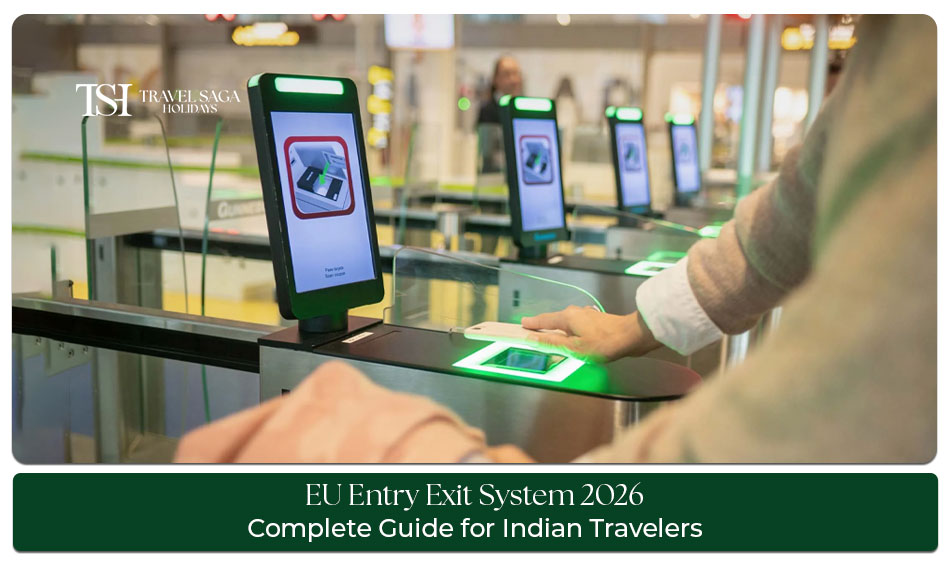
If you’ve been dreaming of exploring the cobblestone streets of Paris, the canals of Amsterdam, or the ruins of Rome, here’s something important you need to know before you book your holiday packages from India to Europe. The European Union has officially launched a major change at its borders – the EU Entry Exit System (EES) – and it directly affects every Indian traveller heading to the Schengen Area.
Whether you’re a first-time traveller or a frequent flyer to Europe, this guide will walk you through everything you need to know about the EU EES for Indian passport holders in 2026.
What Is the EU Entry Exit System?
The EU Entry Exit System (EES) is a large-scale digital border management system that replaces the old practice of physically stamping passports. Launched progressively from 12 October 2025, the EES became fully operational across all 29 Schengen countries on 10 April 2026.
Every time a non-EU national — including Indian citizens — crosses a Schengen border for a short stay, their entry and exit is now recorded digitally, not with an ink stamp. The system captures:
-
Facial image (facial scan)
-
Fingerprints (up to 4 fingers)
-
Passport or travel document details
-
Date, time, and location of each border crossing
This data is stored securely in the EES database for three years. The EU Entry Exit System for Indian travellers applies whether you arrive by air, land, or sea – at any of the 29 participating Schengen nations, including France, Germany, Spain, Italy, the Netherlands, and Greece. However, you will still need a France visa for Indians or any other Schengen visa before arrival.
Why Has the EU Introduced EES?
The EES was introduced primarily to:
-
Strengthen border security across the Schengen Zone
-
Track and prevent overstays beyond the permitted 90-day limit
-
Detect identity fraud using biometric verification
-
Automate border control and reduce manual errors
Since the system went live, over 45 million border crossings have been registered, and authorities have already detected multiple cases of travellers using fraudulent or duplicate identities — something that was nearly impossible to catch with manual passport stamping.
How Does EES Affect Indian Passport Holders?
As an Indian passport holder, the EU EES changes your border experience significantly. Here’s what happens step by step:
First Visit After EES Launch
When you cross a Schengen border for the first time under the new system, border officials will:
-
Scan your passport or travel document
-
Capture your fingerprints and facial image
-
Log your entry details digitally into the EES database
This initial registration may take a few extra minutes, so it’s wise to arrive at the airport or border crossing earlier than usual, especially during peak travel seasons.
Subsequent Visits
Good news — you won’t need to repeat the full biometric registration every time. On future trips, your fingerprints or facial image will simply be matched against data already stored in the system, making the process faster over time.
The 90/180-Day Rule — Now Strictly Enforced
Indian travellers on a short-stay Schengen visa are permitted to stay for a maximum of 90 days within any 180-day period. Previously, this was tracked manually through passport stamps, which left room for error or disputes.
With the EU Entry Exit System, every entry and exit is recorded precisely. Overstays are flagged automatically. If you exceed your permitted stay, you could face:
-
Fines at the border
-
Deportation
-
A travel ban from re-entering Schengen countries
Use an EES Stay Calculator online to keep track of your allowed days before and during your trip. While the EES will standardize border control, Indian travellers must still follow individual requirements for Austria visa or Slovenia.
Does EES Affect Your Schengen Visa Application?
No – the EU EES does not change Schengen visa rules for Indians. Indian passport holders still need to apply for a Schengen visa (international tourist visa) before travelling to Europe. The visa application process at embassies and consulates remains the same.
However, once your visa is issued, the EU Entry Exit System for Indian travellers changes how your border crossings are processed and monitored. Your EES data may also be referenced during future visa applications to assess your travel history and compliance.
What Should Indian Travellers Do to Prepare?
Here’s a simple checklist to ensure your Europe trip goes smoothly under the new EES:
Before You Travel:
-
Apply for your Schengen visa well in advance — processing times can vary
-
Ensure your passport is valid for at least 3 months beyond your return date
-
Double-check your 90-day stay window using an online EES calculator
-
Book your holiday packages from India in advance
At the Border:
-
Arrive early — initial registrations may cause longer queues, particularly at busy international airports
-
Keep your travel documents, visa, and hotel bookings readily accessible
-
Don’t be alarmed if asked for fingerprints and a facial scan — this is mandatory under EES
-
Families and groups are typically processed together, but each individual must complete biometric capture
During Your Stay:
-
Keep track of your entry date and permitted days carefully
-
Do not overstay your visa under any circumstances — the EU EES India system will flag it automatically
Who Is Exempt from EES?
Not everyone is subject to the EU Entry Exit System. However, you are exempt if you hold:
-
An EU residence permit or long-stay visa (valid for more than 90 days)
-
A residence card linked to an EU national
-
Diplomatic status or special border crossing privileges
-
Intra-corporate transferee, researcher, or student status on long-term programmes
For the vast majority of Indian passport holders travelling to Europe on tourist or business trips, EES applies without exception.
Coming Next: ETIAS — Europe’s Pre-Travel Authorisation
While you’re getting familiar with EES, keep ETIAS on your radar too. The European Travel Information and Authorisation System (ETIAS) — Europe’s equivalent of the US ESTA — is expected to launch in late 2026. However, since Indian passport holders currently require a full Schengen visa, ETIAS will not replace the visa process for Indians. It will primarily affect visa-exempt nationalities.
Key Takeaways for Indian Travellers
-
The EU Entry Exit System for Indian travellers is now fully live as of April 2026
-
Passport stamping is replaced with digital biometric recording at all 29 Schengen borders
-
Your Schengen visa requirement remains unchanged — EES only affects border processing
-
First-time registration will take longer — plan for extra time at the airport
-
The 90/180-day rule is now automatically enforced — overstays will be flagged instantly
-
Biometric data (fingerprints + facial scan) is stored for 3 years in the EES database
-
EU EES Indian passport holders who overstay risk fines, deportation, and future travel bans
- Read our blog for your visa application from India: Top Tips for Getting Tourist Visas from India
FAQs – EU Entry Exit System 2026
Yes. As of April 10, 2026, the EU Entry Exit System is fully operational across 29 Schengen countries. Indian passport holders now process through this digital system for tourism or business in Europe rather than receiving manual ink stamps.
No. Physical passport stamping has officially ended for EU EES Indian passport holders. They now record your entry and exit data electronically in a central EU database. ThisThis change automates the tracking of the 90-day stay limit within the Schengen Area.
Upon your first entry after the April 2026 rollout, you must provide a facial image and four fingerprints. This biometric registration is a one-time requirement that remains valid for three years. Moreover, future trips within this period will only require a quick digital scan for verification.
No. The EES is a border control system, not a visa. Indian travellers must still apply for and obtain a Schengen Visa as usual before travelling. The EES simply replaces the manual “stamping” part of the immigration process once you arrive at the airport.
Reports from the first week of implementation suggest longer-than-usual queues at major hubs like Paris (CDG), Frankfurt, and Amsterdam. First-time registration can add 5–10 minutes per passenger. So, we highly recommend arriving at the airport at least 3 to 4 hours before your flight to account for these new digital formalities.
FAQs – EU Entry Exit System 2026
Yes. As of April 10, 2026, the EU Entry Exit System is fully operational across 29 Schengen countries. Indian passport holders now process through this digital system for tourism or business in Europe rather than receiving manual ink stamps.
No. Physical passport stamping has officially ended for EU EES Indian passport holders. They now record your entry and exit data electronically in a central EU database. ThisThis change automates the tracking of the 90-day stay limit within the Schengen Area.
Upon your first entry after the April 2026 rollout, you must provide a facial image and four fingerprints. This biometric registration is a one-time requirement that remains valid for three years. Moreover, future trips within this period will only require a quick digital scan for verification.
No. The EES is a border control system, not a visa. Indian travellers must still apply for and obtain a Schengen Visa as usual before travelling. The EES simply replaces the manual “stamping” part of the immigration process once you arrive at the airport.
Reports from the first week of implementation suggest longer-than-usual queues at major hubs like Paris (CDG), Frankfurt, and Amsterdam. First-time registration can add 5–10 minutes per passenger. So, we highly recommend arriving at the airport at least 3 to 4 hours before your flight to account for these new digital formalities.
Plan Your Europe Trip with Confidence
The EU Entry Exit System may sound daunting at first, but once you understand the process, it’s straightforward. Being well-prepared with the right documents, a valid international tourist visa, and awareness of your permitted stay dates ensures that you enjoy your European dream holiday without a hitch.
For personalised guidance on Schengen visa applications, Europe holiday packages from India, and the latest EU EES India travel updates, visit Travel Saga Holidays – your trusted travel partner for seamless international travel planning.
Read more informative blogs:
Top Tips for Getting Tourist Visas from India: Ultimate 2026 Guide